
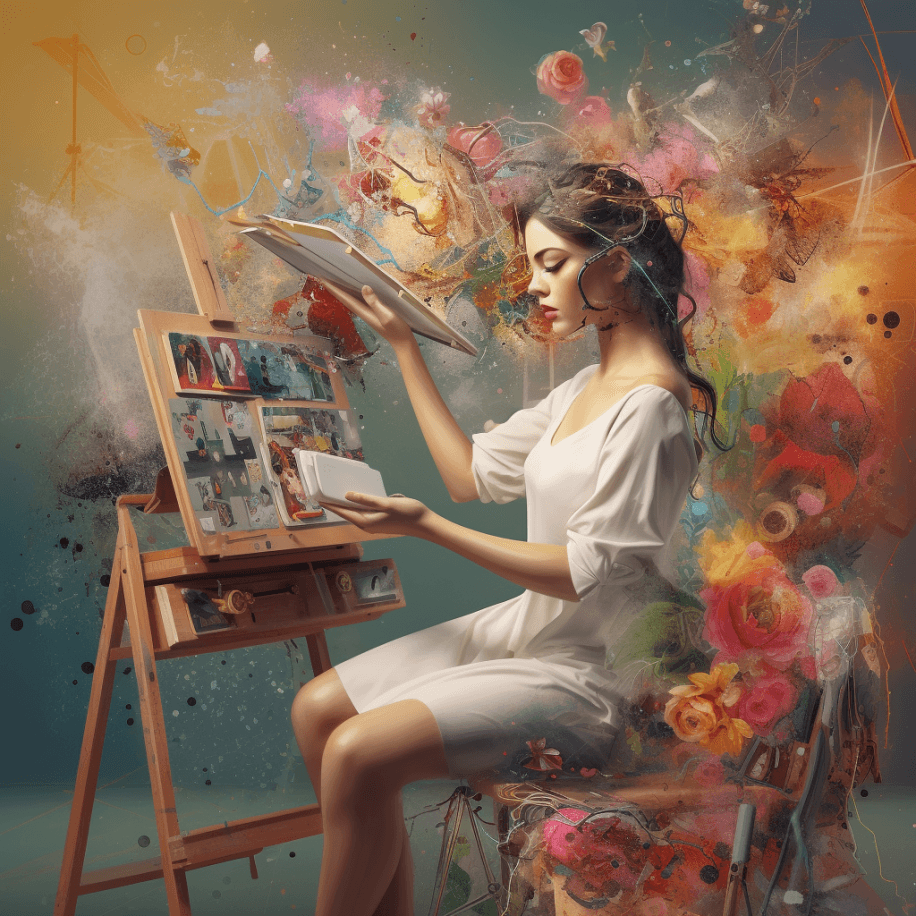

Art teachers have long been tasked with the responsibility of helping their students develop and express their creativity. However, with the advent of artificial intelligence (AI) and agile techniques, art teachers now have a new set of tools at their disposal to help unlock their students' creativity.
AI is increasingly being used in the creative arts, from music composition to visual arts. This technology can assist artists by generating new ideas and helping to refine existing ones. One way that art teachers can use AI to unlock their students' creativity is by using tools such as generative art algorithms, which allow students to explore new ideas by generating new designs or patterns.
Agile techniques are another powerful tool that art teachers can use to unlock creativity. Agile is a project management methodology that emphasizes collaboration, flexibility, and rapid iteration. By using agile techniques in the classroom, art teachers can create a more collaborative and experimental environment that encourages students to take risks and explore new ideas.
Here are some ways that art teachers can use AI and agile techniques to unlock creativity in their students:
- Use generative art algorithms to inspire new ideas: Generative art algorithms are algorithms that generate new designs or patterns based on a set of rules or parameters. By using generative art algorithms in the classroom, art teachers can give their students a starting point for their creative exploration. For example, a generative art algorithm could generate a series of patterns that students could use as a starting point for a project.
- Encourage experimentation and iteration: Agile techniques emphasize rapid iteration and experimentation. By encouraging students to try out different ideas and approaches, art teachers can help them discover new creative possibilities. One way to encourage experimentation is to set up a "sprint" system, where students have a set amount of time to work on a project before presenting their progress to the class. This can help students stay focused and motivated, and also allows them to get feedback from their peers.
- Foster a collaborative environment: Collaboration is a key component of agile methodologies. By creating a collaborative environment in the classroom, art teachers can help their students develop their ideas through discussion and feedback. One way to foster collaboration is to set up small groups or teams, where students can work together on a project. This can help students develop communication and teamwork skills, as well as expose them to new ideas and perspectives.
- Emphasize flexibility and adaptability: Agile methodologies prioritize flexibility and adaptability over rigid plans and schedules. By emphasizing these values in the classroom, art teachers can help their students become more open to new ideas and approaches. One way to do this is to allow students to change their project ideas or approaches mid-way through the project, if they feel that a different direction would be more fruitful.
In conclusion, by incorporating AI and agile techniques into their teaching, art teachers can help their students unlock new levels of creativity. Generative art algorithms, rapid iteration and experimentation, collaboration, and flexibility are just a few of the tools that can be used to create a more dynamic and exploratory learning environment. By embracing these techniques, art teachers can help their students develop their creative skills and explore new possibilities in the arts.